

practice
practice

We don’t love any of the terms for people of the global majority/BIPOC/BBIA/racialized people/people of color etc. So you’ll see us use many different versions, with many different capitalizations in our writing. It’s one way we play and experiment; it’s us practicing.
We love the term “practice” for what we do. We feel so-so about the word ‘progress,’ with all its ties to capitalism, but we know we need to invite our imaginative powers towards an anti-racist future, so “progress” serves us for now.
Anti-Racisting is relational action— not a checklist, a handout, or a Powerpoint, but continuous DOING. We are guided by the words of Black Panther Fred Hampton: “Theory without practice ain’t shit”. Doing is messy, it’s risky, but it’s the site of our growing edge, and where change happens. Anti-racisting is something we DO as a personal, communal and systemic change practice. Practice speaks to the ongoingness, the over and over, the trying-again, and the commitment to long-term healing, which is unfinished and continuous by nature.
Practice Progress was dreamed by Kai and Sarah as a space that centers Black and brown healing, rest, and community and accountability action for white people. This is what it is required for interracial trust to grow. What Kai and Sarah share with others, is made possible by their commitment to build and rebuild their interracial interclass relationship. They go to therapy together. They share a bank account turned racial justice micro-fund. Care work as practicing change work.
Within the practice of anti-racisting is the ever-changing and profoundly healing work of trust.
Throughout our relationship, "we've worked to challenge our inner "fairness police", the voice telling us that trust is as simple as just "meeting each other halfway”. We have so much in common, so much that might appear as sameness: As kids, we both trained intensely in western concert dance, we both moved away from this training and toward experimental performance making in our twenties, we both became company directors of social justice oriented performance collectives, and we both understand our calling as teachers as path to cultivate care in community. All of this shared experience has provided a powerful access point for us to deal directly with the disparate ways that racism has impacted us. The process of building genuine interracial trust has meant taking the time to hold the realities of racialized experience within and between us: racist disparities in intergenerational wealth accumulation and health outcomes, disregard for the safety of Black and Brown bodies, minority stress and racial battle fatigue in historically white institutions, and white supremacist ideals for bodies, movement, and healing practices. As we build trust between us again and again, we understand that our work, just like our relationship, must not be guided by sameness or “fairness” but instead by an ethic of care. Here are some ways we practice care in our relationship and in our offerings:
White participants of our public programs pay for all tuition fees for BIPOC participants. We split all fees 65% to Kai and 35% to Sarah because we want to live in a world that honors Black reparations. When we work in race based affinity spaces, Kai will often come into the White Working Group to offer a piece of learning from her perspective, and then leave Sarah with the white people to process any messy reactions, protecting Kai from messy reactions.
If we are hired by white leaders of an institution, we require an intake meeting with the people of color from the institution as well. When we work with predominately white institutions we say “No, the White Working Group cannot be larger than the BBIA Rest Circle. You will need to invite people of color from the community to join the workshops free of charge to build your numbers in the BIPOC Rest Circle. Anti-racisting work cannot focus its resources on white people.” Any chance we get to facilitate people of color resting on company time, we do. We only combine groups within our workshops when the Global Majority Circle consents.
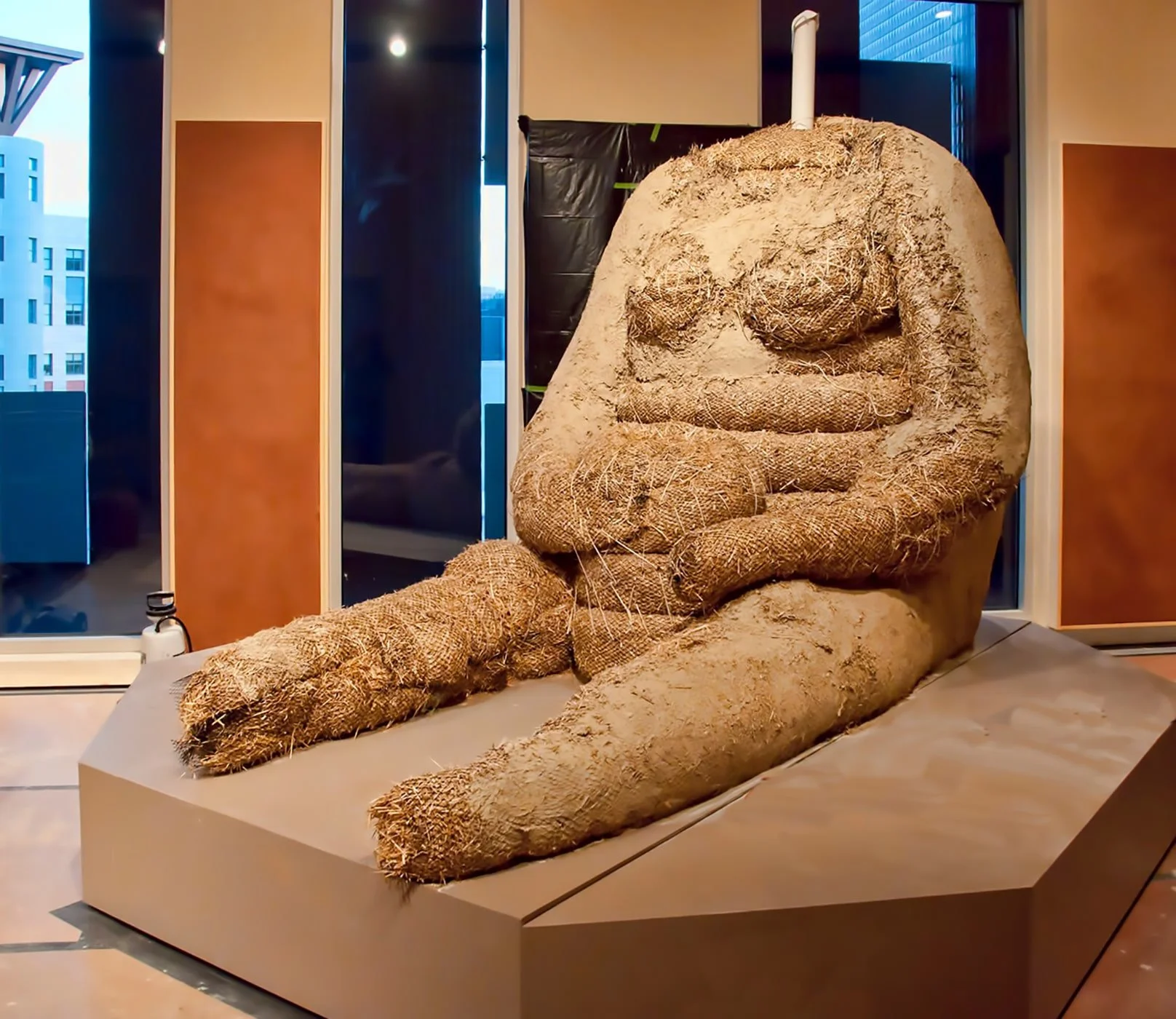
Roxanne Swentzell’s Mud Woman Rolls On
“The most important thing you [white people] can do to unravel white-body supremacy- and to heal your own historical and secondary trauma around race- is to notice what your body does in the presence of an unfamiliar Black body, and then learn to settle your body in the midst of that presence.”
― Menakem, 2017, 213
“Just as patience is a practice, rather than a feeling, hope and grief are not simply things we feel, but things we enact in the world.”
― Kelly Hayes and Mariame Kaba, Let This Radicalize You (2023)